Pyongyang · page 3
From Wikipedia, «Pyongyang», revision of the 2026-09-01 dump, CC BY-SA 4.0. The trees and pragmatics of these pages, Mova's parse of that text, are CC BY-SA 4.0 too.
← previous 1 2 3
Pyongyang has a rapidly evolving skyline, dominated by high-rise apartment buildings.182 A construction boom began with the Changjon Street Apartment Complex, which was completed in 2012.[99]183 Construction of the complex began after late leader Kim Jong Il described Changjon Street as "pitiful".[100]184 Other housing complexes are being upgraded as well, but most are still poorly insulated, without elevators or central heating.[101]185 An urban renewal program continued under Kim Jong Un's leadership, with the old apartments of the 1970s and '80s replaced by taller high rise buildings and leisure parks like the Kaesong Youth Park, as well as renovations of older buildings.[102]186 In 2018, the city was described as unrecognizable compared to five years before.[103]187
Landmarks
Main article: List of tourist attractions in Pyongyang
Notable landmarks in the city include:188
- The Ryugyong Hotel189
- The Kumsusan Palace of the Sun190
- The Arch of Triumph (heavily inspired by, but larger than, the Arc de Triomphe in Paris corpus)191
- The birthplace of Kim Il Sung at Mangyongdae Hill at the city outskirts192
- Juche Tower, a monument to the philosophy of Juche (self-reliance)193
- Two large stadiums:194
- Rungrado 1st of May Stadium (the second largest stadium in the world by seating capacity)195
- Kim Il Sung Stadium196
- The Mansu Hill complex, including the Korean Revolution Museum197
- Kim Il Sung Square198
- Yanggakdo International Hotel199
Pyongyang TV Tower is a minor landmark.200 Other visitor attractions include the Korea Central Zoo.201 The Pyongyang–Kaesong Motorway stretches from Pyongyang to the Korean Demilitarized Zone (DMZ).202
Culture
Cuisine
See also: North Korean cuisine
Pyongyang served as the provincial capital of South Pyongan Province until 1946,[104] and Pyongyang cuisine is part of the general culinary tradition of the Pyongan province.203 The most famous local food is Pyongyang raengmyŏn, or also called mul raengmyŏn or just simply raengmyŏn.204 Raengmyŏn literally means "cold noodles", while the affix mul refers to water because the dish is served in a cold broth.205 Raengmyŏn consists of thin and chewy buckwheat noodles in a cold meat-broth with dongchimi (watery kimchi) and topped with a slice of sweet Korean pear.206
Pyongyang raengmyŏn was originally eaten in homes built with ondol (traditional underfloor heating) during the cold winter, so it is also called "Pyongyang deoldeori" (shivering in Pyongyang).207 Pyongyang locals sometimes enjoy it as a haejangguk, which is any type of food eaten as a hangover cure, usually a warm soup.[105]208
Another representative Pyongyang dish, Taedonggang sungeoguk, translates as "flathead grey mullet soup from the Taedong River".209 The soup features flathead grey mullet (abundant in the Taedong River) along with black peppercorns and salt.[106]210 Traditionally, it has been served to guests visiting Pyongyang.211 Therefore, there is a common saying, "How good was the trout soup?", which is used to greet people returning from Pyongyang.212 Another local specialty, Pyongyang onban (literally "warm rice of Pyongyang"), comprises freshly cooked rice topped with sliced mushrooms, chicken, and a couple of bindaetteok (pancakes made from ground mung beans and vegetables).[105]213
Social life
In 2018, there were many high-quality restaurants in Pyongyang with Korean and international food, and imported alcoholic beverages.[103]214 Famous restaurants include Okryu-gwan and Ch'ongryugwan.[107]215 Some street food exists in Pyongyang, where vendors operate food stalls.[108]216 Foreign foods like hamburgers, fries, pizza, and coffee are easily found.[103]217 There is an active nightlife with late-night restaurants and karaoke.[103]218
The city has water parks, amusement parks, skating rinks, health clubs, a shooting range, and a dolphinarium.[102]219
Sports
See also: Sport in North Korea
Pyongyang has a number of sports clubs, including the April 25 Sports Club and the Pyongyang City Sports Club.[109]220
Economy
Pyongyang is North Korea's industrial center[36] because of the abundance of natural resources like coal, iron and limestone, as well as good land and water transport systems.221 Pyongyang was the first industrial city to emerge in North Korea after the Korean War.222 Light and heavy industries are both present and have developed in parallel.223 Heavy manufactures include cement, industrial ceramics,[42] munitions and weapons, but mechanical engineering remains the core industry.224 Light industries in Pyongyang and its vicinity include textiles, footwear and food, among others.[42]225 Special emphasis is put on the production and supply of fresh produce and subsidiary crops in farms on the city's outskirts.226 Other crops include rice, sweetcorn and soybeans.227 Pyongyang aims to achieve self-sufficiency in meat production.228 High-density facilities raise pigs, chicken and other livestock.[36]229
Until the late 2010s, Pyongyang still experienced frequent shortages of electricity.[110]230 To solve this problem, two power stations – Huichon Power Stations 1 and 2 – were built in Chagang Province and supply the city through direct transmission lines.231 A second phase of the power expansion project was launched in January 2013, consisting of a series of small dams along the Chongchon River.232 The first two power stations have a maximum generating capacity of 300 megawatts (MW), while the 10 dams to be built under the second phase are expected to generate about 120 MW.[110]233 In addition, the city has several existing or planned thermal power stations.234 These include Pyongyang TPS with a capacity of 500 MW, East Pyongyang TPS with a capacity of 50 MW, and Kangdong TPS which is under construction.[111]235
Retail
Pyongyang is home to several large department stores including the Pothonggang Department Store, Pyongyang Department Store No. 1, Pyongyang Department Store No. 2, Kwangbok Department Store, Ragwon Department Store, Pyongyang Station Department Store, and the Pyongyang Children's Department Store.[112]236
The city also has Hwanggumbol Shop, a chain of state-owned convenience stores supplying goods at prices cheaper than those in the jangmadang markets.237 Hwanggumbol Shops are specifically designed to control North Korea's expanding markets by attracting consumers and guaranteeing the circulation of money in government-operated stores.[113]238
Transportation
Pyongyang is the main transport hub of the country: it has a network of roads, railways and air routes which link it to both foreign and domestic destinations.239 It is the starting point of inter-regional highways reaching Nampo, Wonsan and Kaesong.[36]240 Pyongyang railway station serves the main railway lines, including the Pyongui Line and the Pyongbu Line.241 Regular international rail services to Beijing corpus, the Chinese border city of Dandong and Moscow corpus are also available.242
A rail journey to Beijing takes about 25 hours and 25 minutes (K27 from Beijing/K28 from Pyongyang, on Mondays, Wednesdays, Thursdays and Saturdays); a journey to Dandong takes about 6 hours (daily); a journey to Moscow takes six days.243 The city also connects to the Eurasian Land Bridge via the Trans-Siberian Railway.244 A high-speed rail link to Wonsan is planned.[114]245
The Metro, tram and trolleybus systems are used mainly by commuters as a primary means of urban transportation.[36]246 Cycle lanes were introduced on main thoroughfares in July 2015.[115]247 There are relatively few cars in the city.248 Cars are a status symbol in the country due to their scarcity resulting from import restrictions caused by international sanctions and domestic regulations.[116]249 Some roads are also reported to be in poor condition.[117]250 However, by 2018, Pyongyang had begun to experience traffic jams.[103]251
State-owned Air Koryo has scheduled international flights from Pyongyang Sunan International Airport to Beijing (PEK), Shenyang (SHE) and Vladivostok (VVO).[118]252 The only domestic destinations are Hamhung, Wonsan, Chongjin, Hyesan and Samjiyon.253 Since 27 July 2025, Nordwind Airlines has served direct flights between Moscow–Sheremetyevo and Pyongyang once a month.[119]254
Demographics
According to the 2008 population census, the city has a population of 3,255,288.[120]255 It is estimated that 99% of those living in Pyongyang are members, candidate members, or dependents of members of the ruling Workers' Party of Korea (WPK).[121]256
Education and science
Kim Il Sung University, North Korea's oldest university, was established in 1946.[36]257 It has 21 faculties, 4 research institutes, and 10 other university units.[122][123][124]258 These include the primary medical education and health personnel training unit, the medical college; a physics faculty which covers a range of studies including theoretical physics, optical science, geophysics and astrophysics;[125] an atomic energy institute and the largest law firm in the country (Ryongnamsan Law Office).[126]259 Kim Il Sung University also has its own publishing house, sports club (Ryongnamsan Sports Club),[127] revolutionary museum, nature museum, libraries, gym, indoor swimming pool and apartment units for educators.260 Its four main buildings were completed in 1965 (Building 1), 1972 (Building 2), and 2017 (Buildings 3 and 4).[128][129][130]261
Other higher education establishments include Kim Chaek University of Technology, Pyongyang Medical University, Pyongyang University of Music and Dance and Pyongyang University of Foreign Studies.262 Pyongyang University of Science and Technology (PUST) is the country's first private university; most of its lecturers are American and courses are carried out in English.[131][132]263 A science and technology hall is under construction on Ssuk Islet.264 Its stated purpose is to contribute to the "informatization of educational resources" by centralizing teaching materials, compulsory literature and experimental data for state-level use in a digital format.[133]265
Sosong-guyok hosts a 20 MeV cyclotron called MGC-20.266 The initial project was approved by the International Atomic Energy Agency (IAEA) in 1983 and funded by the IAEA, the United States and the North Korean government.267 The cyclotron was ordered from the Soviet Union in 1985 and constructed between 1987 and 1990.268 It is used for student training, production of medical isotopes for nuclear medicine as well as studies in biology, chemistry and physics.[134]269
Healthcare
Medical centers include the Red Cross Hospital, the First People's Hospital, which is located near Moran Hill and was the first hospital built in North Korea after the liberation of Korea in 1945,[135] the Second People's Hospital, Ponghwa Recuperative Center (also known as Bonghwa Clinic or Presidential Clinic) located in Sokam-dong, Potonggang-guyok, 1.5 km northwest of Kim Il Sung Square,[136] Pyongyang Medical School Hospital, Namsan Treatment Center which is adjacent[137] Pyongyang Maternity Hospital, Taesongsan General Hospital,[138] Kim Man-yoo Hospital, Staff Treatment Center and Okryu Children's Hospital.270 A new hospital named Pyongyang General Hospital began construction in Pyongyang in 2020.[139]271
Twin towns – sister cities
Pyongyang is twinned with:[140]272
- Baghdad corpus, Iraq273
- Chiang Mai, Thailand274
- Dubai, United Arab Emirates275
- Jakarta corpus, Indonesia276
- Kathmandu corpus, Nepal277
- Moscow corpus, Russia278
- Tianjin, China279
- Ulaanbaatar corpus, Mongolia[141]280
See also
List of second-level administrative divisions of North Korea
Bibliography
- Webster, Hugh Alexander (1878). "281 Encyclopædia Britannica".282 Charles Scribner's Sons..283
- "North Korea – A Country Study".284 Library of Congress Country Studies.285 2009.286
Further reading
Dormels, Rainer (2014). "North Korea's Cities: Industrial Facilities, Internal Structures and Typification". Jimoondang.
Em, Pavel P.; Ward, Peter; Prokopljevic, Jelena; Zakharova, Liudmila V.; Sigley, Alek (Spring 2021). "City Profile of Pyongyang 3.0: Inside Out". North Korean Review.
Kim Chun-hyok (2014). "Panorama of Pyongyang". Foreign Languages Publishing House.
Kracht, Christian; Munz, Eva; Nikol, Lukas (October 2007). "The Ministry of Truth: Kim Jong Il's North Korea". Feral House.
"Architectural and Cultural Guide Pyongyang". DOM. 2012.
Springer, Chris (2003). "Pyongyang: The Hidden History of the North Korean Capital". Saranda Books.
"Pyongyang in Kim Jong Un's Era". Foreign Languages Publishing House. 2021.
Willoughby, Robert (2003). "North Korea: The Bradt Travel Guide". Globe Pequot.
External links
Interactive virtual tour Aerial view of Pyongyang city
Super High Resolution Image Panoramic view of Pyongyang city
North Korea Uncovered (North Korea Google Earth), a comprehensive mapping of North Korea, including all of the locations mentioned above, on Google Earth
← previous 1 2 3
References
1. Funabashi, Yoichi (2007). "The Peninsula Question: A Chronicle of the Second Northern Korean Nuclear Crisis". Brookings Institution Press.
2. "The Statesman's Yearbook 2016: The Politics, Cultures and Economies of the World".
3. United Nations. "Democratic People's Republic of Korea". Data.un.org.
4. "Specialties of Korea". Foreign Languages Publishing House. 2022.
5. Wells, John C. (2008). "Longman Pronunciation Dictionary". Longman.
6. "Pyongyang definition and meaning | Collins English Dictionary".
7. "Definition of P'YŎNGYANG". www.merriam-webster.com.
8. /pjɒŋˈjæŋ,_pjʌŋ-,_-jɑːŋ/;[5][6][7] pʰjɔŋ.jaŋ
9. "'평양(平壤)' 지명은 '부루나'에서 유래". SPN 서울평양뉴스. 2023-03-30.
10. "ko:평양이라는 이름의 유래". Uriminzokkiri.
11. Funabashi, Yōichi (2007). "The peninsula question : a chronicle of the second Korean nuclear crisis". Brookings Institution Press.
12. "Map – Pyongyang – MAP[N]ALL.COM". www.mapnall.com.
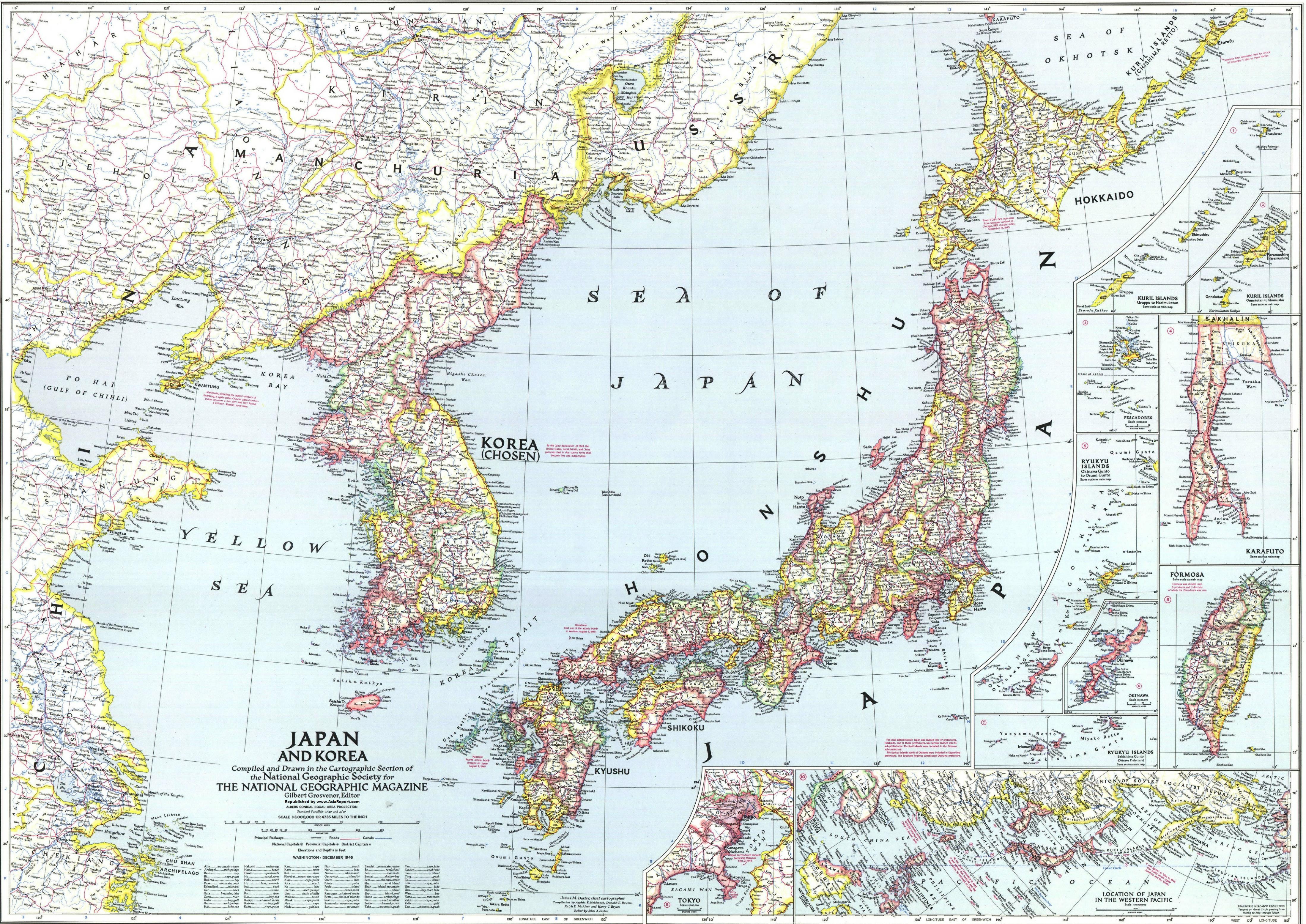
13. "Japan and Korea compiled and drawn in the Cartographic Section of the National Geographic Society for The National Geographic Magazine". Gilbert Grosvenor. 1945.
14. "Heijō: North Korea".
15. "Heijō-fu: North Korea".
16. "Heizyō: North Korea".
17. "Heizyō Hu: North Korea".
18. "Hpyeng-yang: North Korea".
19. "P-hjöng-jang: North Korea".
20. "Phyeng-yang: North Korea".
21. "Phyong-yang: North Korea".
22. "Pienyang: North Korea".
23. Blunden, Caroline (1998). "Cultural Atlas of China". Facts on File.: "Names in italics represent the Wade-Giles equivalent of the preceding Pinyin transcription....Pingrang/P'ing-jang see Pyongyang"
24. "The New Columbia Encyclopedia". Columbia University Press. 1975. "Chin. P'ing-jang"
25. Wilkinson, Endymion (2012). "Chinese History: A New Manual". Harvard University Press. "The DPRK (Joseon Minjujui Inmin Konghuaguk 朝鮮民主主義人民共和國) is read in Chinese as Chaoxian minzhu zhuyi renmin gonghe guo, and its capital, Pyeonyang, is pronounced Pingrang 平壤."
26. "Pingyang: North Korea".
27. "Pyengyang: North Korea".
28. ''EB'' 1878, p. 390.
29. These include: Heijō-fu,[15] Heizyō,[16] Heizyō Hu,[17] Hpyeng-yang,[18] P-hjöng-jang,[19] Phyeng-yang,[20] Phyong-yang,[21] Pienyang,[22] P'ing-jang,[23][24] Pingrang,[23][25] Pingyang,[26] Pyengyang,[27] and Pieng-tang.[28]
30. Hermann Lautensach (1988). "Korea: A Geography Based on the Author's Travels and Literature". Springer.
31. Lankov, Andrei (16 March 2005). "North Korea's missionary position". Asia Times Online.
32. Caryl, Christian (15 September 2007). "Prayer in Pyongyang". The Daily Beast. The Newsweek/Daily Beast Co.
33. "「혁명의 수도」선포...금속·건재 공업이 주류". JoongAng Ilbo. 1989-07-03.
34. "Pyongyang was to become 'Kim Il Sung City'; The followers of Kim Jong Il suggested the idea". Daily NK. 21 February 2005.
35. National Research Institute of Cultural Heritage. 2001. Geumtan-ri. Hanguk Gogohak Sajeon [Dictionary of Korean Archaeology], pp. 148–149. NRICH, Seoul. ISBN 89-5508-025-5
36. "Pyongyang". Encyclopædia Britannica Online.
37. Nanglang-state is different from Lelang Commandery.
38. Beckwith, Christopher I. (2009). "Empires of the Silk Road: A History of Central Eurasia from the Bronze Age to the Present". Princeton University Press.
39. Beckwith, Christopher I. (2007). "Koguryo: The Language of Japan's Continental Relatives". Brill.
40. "Pyongyang, one-time Jerusalem of East". The Korea Times. 2021-03-04.
41. Lahmeyer, Jan. "North Korea – Urban Population". Populstat. University of Utrecht.
42. "P'yŏngyang | national capital, North Korea | Britannica". 29 May 2023.
43. "March 1st movement Pyongyang". 5 March 2019.
44. "朝鮮物産奨励運動".
45. "ko:물산장려운동".
46. Memorandum (Institute of Pacific Relations, American Council), Vol. 2, No. 5 (16 Mar 1933), pp. 1–3
47. Buzo, Adrian (2002). "The Making of Modern Korea". Routledge.
48. "Pyongyang taken as UN retreats, 1950". BBC Archive.
49. Schinz, Alfred; Eckart, Dege (1990). "Pyongyang-Ancient and Modern – the Capital of North Korea". GeoJournal.
50. 金聖甫、李信澈「写真と絵で見る北朝鮮現代史」監修: 李泳采、韓興鉄訳、コモンズ、東京・新宿(原著2010年12月1日).ISBN 978-4861870750. 2018年4月30日閲覧.
51. "Korea (Democratic People's Republic of) 1972 (rev. 1998) Constitution - Constitute". www.constituteproject.org.
52. Hahn (2018). "Architectural Development in North and South Korea". Proceedings of the 11th FIG International Symposium on Deformation Monitoring (TUFE). International Federation of Surveyors.
53. "Crying by numbers at Kim's state funeral". The Independent. 1994-07-19.
54. "ko:[통일문화가꿔가기 38] 평양 창전거리 건설 비하인드 소설《강자》". 자주시보.
55. Féron, Henri (18 July 2017). "Pyongyang's Construction Boom: Is North Korea Beating Sanctions?". 38 North.
56. Yoo, Cheong-mo (11 October 2018). "N. Korean leader visits newly renovated orchestra theater in Pyongyang". Yonhap News Agency.
57. Zwirko, Colin (9 January 2019). "Major demolition underway in central Pyongyang's Moranbong district: imagery | NK News". NK News.
58. Zwirko, Colin (14 June 2022). "Major construction springs up in shadow of infamous Pyongyang hotel: Imagery". NK PRO.
59. "Newstream".
60. Jang, Seulkee (15 April 2022). "Interiors of many new apartments in Pyongyang still remain incomplete". Daily NK.
61. Williams, Martyn (15 April 2021). "Pyongyang Development Projects off to a Strong Start". 38 North.
62. "Kim Jong Un visits construction site for new luxury apartments in Pyongyang | NK News". NK News. 21 August 2021.
63. "North Korean leader Kim Jong Un builds luxury villas over grandfather's old home". Radio Free Asia.
64. Colin Zwirko (2023-02-23). "North Korea adds skyscraper, simplifies designs for major new housing project". NK News.
65. Colin Zwirko (2023-02-16). "Kim Jong Un opens construction on major housing and farm projects in capital". NK News.
66. "Jonwi Street, Grand Monument to Youth Encapsulating the Future Appearance of Our Civilized and Prosperous Country". Korean Architecture. 30 June 2025.
67. Colin Zwirko (2024-04-17). "Kim Jong Un debuts new song praising himself at grand opening of housing project". NK News.
68. Sokolin, Anton (15 May 2024). "Kim Jong Un attends completion ceremony of high-rise street project in capital". NK News.
69. Holland, Oscar; Rippley, Will (19 March 2025). "North Korea unveils new 10,000-home showpiece residential district". CNN.
70. Williams, Martyn; Ragnone, Iliana (2025-03-13). "Quick Take: First Footprints of New Pyongyang Housing Project Appear". NK News.
71. Williams, Martyn (2025-03-10). "Kim Jong Un Plots Continued Renewal of Pyongyang". NK News.
72. Williams, Martyn (26 March 2026). "Pyongyang Housing Push Marches On". 38 North.
73. Williams, Martyn (2026-03-26). "Pyongyang Housing Push Marches On". 38 North.
74. Country Study 2009, p. 63.
75. Muller, M. J. (2012). "Selected climatic data for a global set of standard stations for vegetation science". Springer Science & Business Media.
76. "Pyongyang, North Korea Köppen Climate Classification (Weatherbase)". Weatherbase.
77. "Average Weather in May in Pyongyang, North Korea - Weather Spark". weatherspark.com.
78. "Average Weather in September in Pyongyang, North Korea - Weather Spark". weatherspark.com.
79. "Average Weather in Pyongyang, North Korea, Year Round". weatherspark.com.
80. "Average Weather in Pyongyang, North Korea, Year Round - Weather Spark". weatherspark.com.
81. Country Study 2009, p. 196.
82. Country Study 2009, p. 276–277.
83. Country Study 2009, p. 277.
84. "Haengjeong Guyeok Hyeonhwang". NK Chosun. Also Administrative divisions of North Korea (used as reference for hanja)
85. "ko:조선중앙통신 | 기사 | 화성지구의 행정구역명칭을 정하였다". Korean Central News Agency.
86. "Pyongyang now more than one-third smaller; food shortage issues suspected". Asahi Shimbun. 17 July 2010.
87. "Kangnam moved into Pyongyang". North Korean Economy Watch. 2012-02-29.
88. 안준용. "北, 평양서 150km 떨어진 곳을 평양市에 편입 왜?". The Chosun Ilbo.
89. Country Study 2009, p. 91, 93–94.
90. Country Study 2009, p. 91.
91. Dongwoo Yim (2017-08-24). "A brief urban history of Pyongyang, North Korea – and how it might develop under capitalism". The Architect's Newspaper.
92. Talmadge, Eric (20 November 2017). "Lonely highways: On the road in Kim Jong Un's North Korea". Associated Press. AP.
93. Country Study 2009, p. 97.
94. Country Study 2009, p. 91–92.
95. "Architecture and City Planning". Library of Congress.
96. Glenday, Craig (2013). "Guinness World Records 2014". Guinness World Records Limited.
97. "Will 'Hotel of Doom' ever be finished?". BBC News. BBC. 15 October 2009.
98. Yoon, Sangwon (1 November 2012). "Kempinski to Operate World's Tallest Hotel in North Korea". Bloomberg.
99. Gray, Nolan (16 October 2018). "The Improbable High-Rises of Pyongyang, North Korea". Bloomberg.com.
100. Lee, Seok Young (25 August 2011). "'Pitiful' Changjeon Street the Top Priority". Daily NK.
101. "Pyongyang glitters but most of NKorea still dark". Yahoo News. 29 April 2013.
102. Makinen, Julie (20 May 2016). "North Korea is building something other than nukes: architecture with some zing". Los Angeles Times.
103. Salmon, Andrew (4 December 2018). "Going native in the Hermit Kingdom". Asia Times.
104. "ko:평양시 平壤市" [Pyongyang]. Nate/Encyclopedia of Korean Culture.
105. "ko:닮은 듯 색다른 매력을 간직한 북한의 음식 문화". Korea Knowledge Portal. 19 June 2009.
106. Ju, Wan-jung (주완중) (12 June 2000). "ko:'오마니의 맛' 관심" [Attention to "Mother's taste"]. The Chosun Ilbo.
107. Lankov, Andrei (2007). "North of the DMZ: Essays on daily life in North Korea". McFarland.
108. Pearson, James; Yeom, Seung-Woo. "Fake meat and free markets ease North Koreans' hunger". Reuters.
109. "The Sights and Sounds of Domestic Football in North Korea". Footy Fair. August 2015.
110. "Ten Power Plants on Chongchon River under Construction to Increase Power Supply to Pyongyang". Institute for Far Eastern Studies. 19 December 2014.
111. "Pyongyang's Perpetual Power Problems". 38 North. 25 November 2014.
112. "Pyongyang Metro maps". pyongyang-metro.com.
113. "Effort to Prevent Outflow of Capital into Markets". Institute for Far Eastern Studies. 20 March 2015.
114. "Outline for Development of Wonsan-Kumgangsan Tourist Region Revealed". Institute for Far Eastern Studies. 26 March 2015.
115. "North Korea installs bike lanes in Pyongyang". Telegraph. Reuters. 14 July 2015.
116. Martin, Bradley K. (9 July 2007). "In Kim's North Korea, Cars Are Scarce Symbols of Power, Wealth". Bloomberg.
117. Fisher, Max (16 April 2012). "North Korean Press Bus Takes Wrong Turn, Opening Another Crack in the Hermit Kingdom". The Atlantic.
118. "Air Koryo opens new office selling tickets for third country travel". NK News. 7 December 2016.
119. "zh:国航17日起暂停平壤航线 _手机新浪网". sina.cn. 14 April 2017.
120. "D P R Korea, 2008 Population Census, National Report".
121. Collins, Robert (2012). "Marked for Life: Songbun, North Korea's Social Classification System". Committee for Human Rights in North Korea.
122. "Faculties – Kim Il Sung University". 2022-06-30.
123. "Research Institutes – Kim Il Sung University". 2022-06-30.
124. "Units – Kim Il Sung University". 2022-06-30.
125. "Colleges and Faculties". Kim Il Sung University.
126. "Ryongnamsan Law Office – Kim Il Sung University". 2022-06-30.
127. "Research Institutes and Units". Kim Il Sung University.
128. "Main Buildings". Kim Il Sung University.
129. "Building No. 3 – Kim Il Sung University". 2022-07-01.
130. "Building No. 4 – Kim Il Sung University". 2022-07-01.
131. "Inside North Korea's Western-funded university". BBC News. 3 February 2014.
132. "In North Korea, a Western-backed university". The Washington Post. 8 October 2011.
133. "Science and Technology Hall to be Built in Pyongyang's Ssuk Islet". Institute for Far Eastern Studies. 23 January 2015.
134. "MGC-20 Cyclotron". NTI.org.
135. "Pyongyang City People's Hospital No. 1". Korean Central News Agency. 22 May 2002.
136. "Ponghwa Clinic Expanded During 2009-2010, NK Leadership Watch". Nkleadershipwatch.wordpress.com.
137. "Where Did Kim Jong Il Receive His Surgery?". North Korean Economy Watch. 2007-06-25.
138. "I Had A Scary Encounter With North Korea's Crumbling Healthcare System". Business Insider.
139. Williams, Martyn (3 April 2020). "Construction Progressing Rapidly at the Pyongyang General Hospital". 38 North.
140. Corfield, Justin (2013). "Historical Dictionary of Pyongyang". Anthem Press.
141. "Хотын дарга С.Батболд Токио хотын засаг дарга Юрико Койкэтэй уулзлаа". Mongolian Government. 2017-04-20.
← previous 1 2 3
This page in Markdown → https://md.mova.elamur.ai/free/en/corpora/wikipedia/en/Pyongyang/page/3/